Author: Helena Welsh

From Awareness to Action: Inclusion Every Day

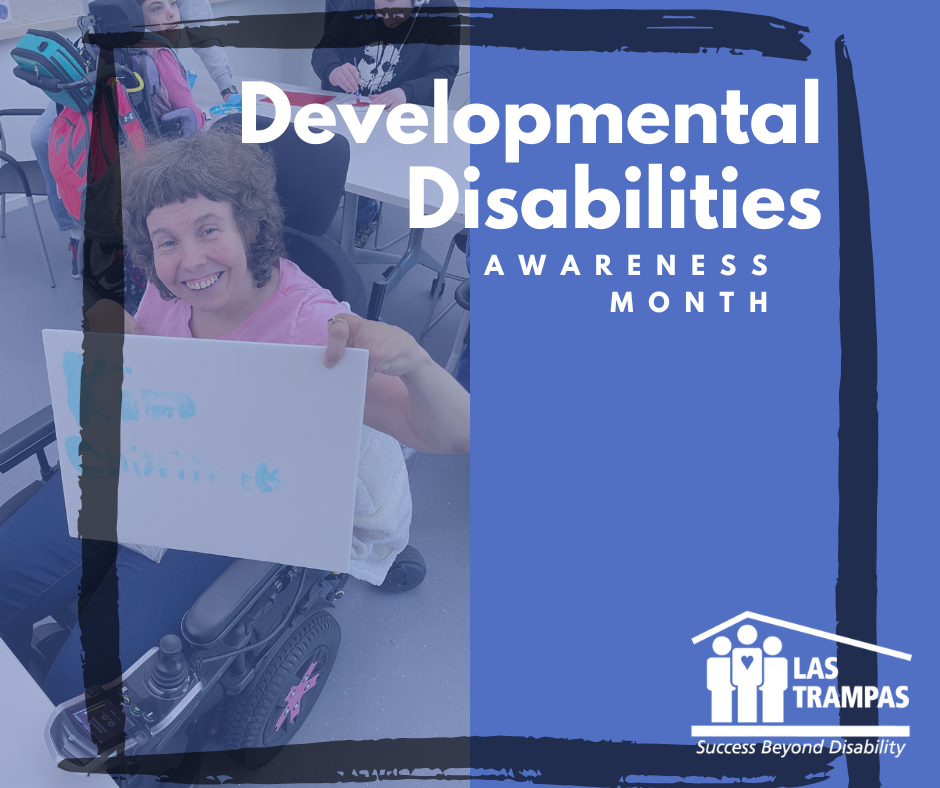
Developmental Disabilities Awareness Month (DDAM) is more than a moment on the calendar. It is an opportunity to recognize the value, contributions, and presence of people with developmental disabilities in every part of community life. It is also a call to strengthen inclusion, deepen understanding, and create spaces where everyone is seen, supported, and welcomed.

This year’s theme, “We’re Here: Then, Now, Always.” captures that message powerfully. People with developmental disabilities have always been part of our neighborhoods, schools, workplaces, and communities. They are here today, and they will always belong. True inclusion asks more of us than awareness alone. It calls us to build communities rooted in opportunity, connection, dignity, and belonging every day.

Why Developmental Disabilities Awareness Month Matters

Awareness matters when it leads to action. It becomes meaningful when it challenges assumptions, encourages understanding, and opens the door to authentic relationships and shared experiences. Real awareness helps create communities where people with developmental disabilities are not simply acknowledged, but fully included, genuinely valued, and supported in living rich, connected lives.

How Las Trampas Turns Awareness Into Action

At Las Trampas, this work happens every day. We support adults with intellectual and developmental disabilities through services that strengthen independence, community connection, and quality of life, including:

  • Choice in daily life
  • Community outings
  • Home life supports
  • Skill-building

Through this work, adults with IDD are supported in pursuing personal goals, building meaningful relationships, and living with dignity and belonging. At Las Trampas, inclusion is not just an idea. It lives in everyday moments, small victories, growing confidence, and the connections that make community possible.

Together, let’s keep showing up for inclusion — then, now, and always.
Plug-In to Care: The Power of Connection for Family Caregivers

The room is quiet except for the soft, steady click of a pill organizer. A mom double-checks Tuesday’s meds, sets a reminder for speech therapy, and texts a ride-share code to her dad’s volunteer driver. She isn’t a superhero. She’s a caregiver—doing a full‑time job on “nights and weekends.” At Las Trampas, we see her every day: the person who makes a thousand invisible decisions so a loved one with a developmental disability can learn, work, and live with dignity. As our new video puts it, caregivers are the heartbeat of our community—and this year, we’re asking everyone to plug in.

🔌 Connection isn’t a luxury. It’s the plan.

There’s a reason the 2025 National Family Caregivers Month theme is “Plug‑In to Care.” Caregiver Action Network made connection the headline because the right tools, networks, and learning moments turn overwhelm into a workable plan. In plain English: you shouldn’t need a PhD or a lucky break to find reliable help. The national campaign is focused on helping caregivers plug into support tools, trusted networks, and educational resources—exactly what we invest in at Las Trampas. (caregiveraction.org)

📈 The numbers behind the love (and the workload)

Let’s get specific. More than one in five U.S. adults—about 53 million people—provide unpaid care to a family member or friend. Many are caring for adults with disabilities, chronic conditions, or age‑related needs. That’s not a niche; that’s a national operating system running in the background of the economy. (aarp.org)

Time is the other currency. Caregivers report spending an average of about 24 hours each week on care, and a sizable share are clocking 40+ hours—functionally a second job without the paycheck. It’s no surprise that coordinating care is getting harder and caregivers’ own health is slipping. (press.aarp.org)

And yes, the dollars add up. Family caregivers’ unpaid labor was valued at roughly $600 billion in 2021—more than total out‑of‑pocket health spending that year. That’s the value of love and logistics, quantified. (press.aarp.org)

🧰 When caregivers plug in, chaos becomes a care plan

It’s workshops that decode services without the alphabet soup. It’s support groups where no one needs a primer to understand the day you just had. It’s a staff that is here to connect caregivers with the resources they need—because no one should have to navigate this journey alone. Those connections don’t just feel good; they save time, reduce errors, and keep families stable.

Nationally, this connection focus is showing up in real offerings—like caregiver webinar series on finding trustworthy resources, building caregiver‑friendly workplaces, and strengthening community ties. Pair that with local, disability‑informed coaching, and you’ve got a system that actually works for real families in places like Lafayette. (caregiveraction.org)

🕰️ The invisible math: time, cash, and tough choices

Here’s the part funders and employers can’t ignore. The typical caregiver spends about $7,242 out of pocket each year—often more than a quarter of their income. Housing costs (think rent contributions or accessibility modifications) make up over half, while medical expenses and supplies chew through the rest. Veteran and military caregivers spend even more—averaging $11,500 annually. If you’re designing benefits, grants, or donor strategies, build for those realities. (aarp.org)

Caregivers are also workers—most hold a job while caregiving—and many are caring for more than one person. When the system assumes “someone at home will figure it out,” that “someone” is usually skipping shifts, burning PTO, or saying no to promotions. That’s not resilience; that’s a policy gap you can fix. (aarp.org)

🧠 Stamina is a strategy, not a perk

Caregiving isn’t just logistics; it’s stamina. In national studies, more caregivers report their own health getting worse, not better. That’s the cost of running on adrenaline and guilt. The antidote isn’t a motivational poster; it’s accessible education, peer support, and respite that’s easy to claim. Our video’s core promise—you are not alone—isn’t word art; it’s a service design principle. (aarp.org)

Caregivers are not a side audience; they’re a core market and the backbone of community care. If you’re a caregiver, connect with us. If you’re a partner, help us expand the on‑ramps. And if you’re a decision‑maker, design for the people doing the real work—because when caregivers are supported, everyone moves forward.

Embracing Diversity: A Movement, Not a Moment

October is the month where the world comes together to celebrate Global Diversity Awareness Month. It’s a time to recognize and honor the vibrant tapestry of cultures, identities, and perspectives that make our world extraordinary. But let’s be real—diversity isn’t just about what sets us apart. It’s about what brings us together.

The core message here is simple yet profound: diversity is the strength in our stories, the power in our perspectives, and the beauty in our differences. At Las Trampas, this means empowering people with intellectual and developmental disabilities to live full, meaningful lives. Through inclusive programs, community engagement, and celebration of neurodiversity, Las Trampas helps break down barriers and build belonging. This isn’t just a one-month gig; it’s a year-round commitment to celebrating the unique contributions of every individual.

The Strength in Our Stories

Diversity is like a patchwork quilt, each piece unique yet essential to the whole. At Las Trampas, diversity means more than just acknowledging differences. It’s about empowering individuals with intellectual and developmental disabilities to live full, meaningful lives. This empowerment is achieved through a variety of inclusive programs that are designed to engage the community and celebrate neurodiversity. By doing so, Las Trampas breaks down barriers and fosters a sense of belonging.

The Power in Our Perspectives

Every individual has a story to tell, and every story has the power to change perspectives. Las Trampas believes that when we embrace diversity, we don’t just change the conversation—we change lives. This belief is reflected in their commitment to celebrating the unique contributions of every individual, not just during Global Diversity Awareness Month, but every single day.

The Beauty in Our Differences

Diversity isn’t a moment; it’s a movement. It’s a continuous journey that requires us to embrace the beauty in our differences. At Las Trampas, this journey is about more than just celebrating diversity—it’s about living it. By fostering an environment where everyone is valued and included, Las Trampas is changing the narrative around intellectual and developmental disabilities.

Embracing Diversity Year-Round

While October is a special time to highlight diversity, the commitment to inclusion at Las Trampas is ongoing. We believe that diversity should be celebrated every day, and that when we embrace it, we create a world where everyone can thrive.

In the end, diversity isn’t just about changing the conversation—it’s about changing lives. And that’s a movement worth being a part of.

Small Acts, Big Equity: How “Make a Difference Day” Becomes a 365-Day Strategy at Las Trampas

The first time I watched a Las Trampas participant lead a garden volunteer crew, I realized we were underestimating the word “difference.” He wasn’t a “client” waiting for help; he was the foreman—assigning roles, cracking jokes, and pulling everyone into the work. By lunch, shy new volunteers were swapping stories, a local manager was asking about internships, and one participant was proudly saying, I show people what I can do. That’s a business case for inclusion—rooted in everyday actions that compound like interest.

Why this matters now—beyond one Saturday in October

On National Make a Difference Day, our message is simple: Adults with IDD are leaders, friends, and neighbors. The data backs up why centering their leadership isn’t charity—it’s strategy.

Scope of the opportunity: More than 1 in 4 U.S. adults—over 70 million people—report having a disability. If your product, hiring, or community strategy doesn’t include disabled adults, it’s missing the market by a mile. (cdc.gov)

Untapped talent: In 2024, only 22.7% of people with disabilities were employed, compared with 65.5% of those without disabilities. Translation: massive skill sitting on the sidelines because of design barriers, not lack of ability. (bls.gov)

Proof it pays: Companies leading in disability inclusion show, on average, 28% higher revenue and 30% higher profit margins than peers. Talent + access + belonging equals performance. That’s not soft; that’s P&L. (newsroom.accenture.com)

At Las Trampas our programming lives this out: Making a difference doesn’t always mean big gestures. It’s supported employment, peer leadership, art shows that become sales, and volunteer days where participants run point. Small acts; big equity.

From volunteer moment to talent pipeline

If you run a company or foundation, volunteering isn’t just optics—it’s infrastructure for hiring and partnership.

People who volunteer are 27% more likely to secure employment than non-volunteers. For those without a high school diploma and for rural volunteers, the odds jump to 51% and 55%. When your team shows up, you’re not “helping for a day”; you’re building mobility. (americorps.gov)

And yes, this holiday is real: Make a Difference Day is observed the fourth Saturday in October—an easy anchor for a fall service sprint that kicks off year-round engagement. (nationaldaycalendar.com)

At Las Trampas, participants aren’t sidekicks on volunteer day—they’re the captains. You’ll see task boards, inclusive roles, and moments where someone says, I volunteer because I love helping others. That leadership muscle transfers beautifully into the workplace.

The operating system of inclusion: design beats intent

Good intentions won’t hire anyone. Good design will.

Supported employment works. Research shows young adults with intellectual disabilities who receive supported employment are more likely to get competitive, integrated jobs, earn higher wages, and work more hours than similar peers who don’t. We build those supports into employer partnerships so you’re not guessing. (journals.sagepub.com)

Macro reality check: Even after a series-high employment-population ratio in 2023, people with disabilities still face more than double the unemployment rate of nondisabled peers. Your systems—not their skills—are usually the bottleneck. (bls.gov)

Our approach is pragmatic: job carving, manager coaching, visual SOPs, sensory-aware workspaces, and feedback loops that actually change schedules, workflows, and culture. You wouldn’t hand a chef a butter knife to shuck an oyster; don’t hand teams “awareness” and call it a hiring plan.

The story we tell—because the data demands it

At Las Trampas, we hold two truths: the numbers are stark, and the solutions are close at hand. When participants say, I make a difference by being a good friend, they’re also modeling the culture your company needs—reliability, collaboration, and pride in work. When we say, At Las Trampas, when we lift each other up, we all shine brighter, we mean shareholders, too.

So yes, celebrate National Make a Difference Day with us. But don’t stop there. Make it your on-ramp to a year of inclusion that moves hiring metrics, strengthens community ties, and proves what we see here every day: belonging isn’t a cost center—it’s a growth strategy. And the smartest founders in the room build for it.

#MakeADifference #Volunteer #Kindness #Charity

Embracing Inclusion: A Journey Beyond Awareness

What if inclusion wasn’t just a goal, but something we live every day? At Las Trampas, inclusion isn’t a buzzword. It’s a promise, a practice, a way of being. And now is the time to make that promise real, for everyone.

Inclusion means more than access. It means dignity, belonging. It means no one has to ask, “Am I allowed here?” Because the answer is always yes.

Now is the time to move from awareness to action. To build communities where every story is heard, every voice lifted. Inclusion is not charity, it’s justice. And when it’s done right, everyone benefits. We’ve seen lives transform, barriers fall, potential rise. Now is the time to stand together, to celebrate differences, to lead with compassion. 

At Las Trampas, inclusion is who we are, and we know that when no one is left behind, we all move forward. Now is the time to be the change. Join us at lastrampas.org and help build a community where everyone belongs.

Inclusion isn’t just about opening doors; it’s about ensuring that everyone feels dignified and valued. The journey of inclusion at Las Trampas is about shifting from mere awareness to tangible action. It’s about creating spaces where every voice is heard and every story matters.

The Power of Inclusion

Inclusion is more than just access. It’s about dignity and belonging. At Las Trampas, the goal is to make sure no one ever feels the need to ask if they belong. The answer is always a resounding yes. This isn’t just a mission; it’s a movement toward justice. When inclusion is genuinely practiced, everyone benefits. Lives transform, barriers fall, and potential is unlocked.

Transforming Lives and Communities

The impact of embracing inclusion is profound. At Las Trampas, there is a commitment to building communities where differences are celebrated and compassion leads the way. Inclusion is not about charity; it’s about justice and equity. The transformation seen in individuals and communities alike is a testament to the power of inclusive practices.

A Call to Action

Now is the time to act. The call to join Las Trampas in their mission is an invitation to become part of a community where everyone belongs. By standing together, celebrating differences, and leading with compassion, we can create a world that moves forward with no one left behind.

Inclusion is a journey, not a destination. It’s about being the change we wish to see in the world. At Las Trampas, inclusion is more than a goal; it’s a lived reality. Join the movement and help build a community where everyone feels they belong.

July is Disability Pride Month

At Las Trampas, we see disability differently. We don’t see limits. We see strength. Determination. Talent. And a community that deserves not just inclusion but celebration.


Disability Pride Month is a reminder that disability is a natural part of the human experience—and every person deserves the dignity, opportunity, and support to live their fullest life.


For more than 65 years, Las Trampas has walked alongside people with developmental and intellectual disabilities and their families—helping them achieve independence, thrive in their communities, and pursue their dreams.


This month and every month, we invite you to:

  • Celebrate the achievements of people with disabilities.
  • Challenge stereotypes and barriers.
  • Commit to building a world where everyone belongs.


Together, we can create a community where pride isn’t just a word—it’s a way of life.
Learn more about how Las Trampas is making inclusion real: https://lastrampas.org/about-us/history/

#DisabilityPrideMonth #LasTrampas #InclusionMatters #CelebrateDifference #WeBelongHere

California Foundation for Stronger Communities

A heartfelt thank you to the California Foundation for Stronger Communities (CFSC) for their generous donation to Las Trampas! This donation is essential for us to continue our mission of empowering people with intellectual and developmental disabilities (IDD) to discover their capabilities and lead full lives in their homes, at work, and in the community.

#nonprofit #impact #donate #funding #philanthropy #education

Summer Appeal – Kate’s Story

When Kate Hartline, one of our most beloved team members, announced her retirement from Las Trampas after 16 incredible years, I was a mess of emotions. While I’m thrilled for her to enjoy a well-earned next chapter, her absence will be felt deeply by participants, families, and staff. During her exit interview, Kate shared reflections and memories so moving that I knew I had to share them with you.

Kate joined Las Trampas, like many do, hoping for a job where she could give back — not just earn a paycheck. Back then, Direct Support Professionals for people with intellectual and developmental disabilities earned just $10 an hour, and still she chose this work. From her first day, it was clear: this was her calling. She brought energy, compassion, and leadership. She committed to high-quality, person-centered care. She refused to let our participants just be “parked” in front of a TV. Instead, she created opportunities for growth – even founding our first walking club when she recognized a need for more physical activity. I soon promoted Kate to Adult Day Program Supervisor, confident she would inspire other staff to lead with the same passion and focus.

And she did just that. When Danny joined our day program, staff were told that he would never speak. But Las Trampas doesn’t accept “never” for an answer. Jeff Dollar, a long-time staff member, worked with Danny daily, encouraging him to say “hi, how are you?” They would walk along our beautiful trail, and every time they came upon another person, Jeff would encourage Danny to say, “hi, how are you?” The first time Kate heard Danny say, “hi, how are you?” the pride in his eyes moved Kate to tears. “Seeing participants achieve their goals is one of the best feelings in the world” she shared.

Kate vividly remembers her first interview at Las Trampas, when a participant named John ran up to greet her. Upon returning for a second interview, John recognized her instantly and exclaimed, “You’re back!” From that moment, Kate knew she had found her place. “The folks that I’ve gotten to know here have changed my life,” she shared. “Las Trampas participants are the most resilient, determined folks I’ve ever known. They face enormous challenges, but they never stop striving. During my time here, I went through a lot personally, and their strength inspired me to keep going when I was at my lowest.”

When asked what she would miss most, Kate didn’t hesitate: “Morning arrivals. That burst of joy when the buses pull up — it’s the best part of the day. Some participants even come in sick because they don’t want to miss out. That’s how I know we’re doing something right.”

Kate takes immense pride in Las Trampas’ status as a premier program. People would call her and say, “Las Trampas is the only place we want our child to go.” This is a reputation only made possible by donors like you. Our top-notch staff and state-of-the-art facility are game changers, but there’s still more to do. We need speech-generating devices, and access to occupational and physical therapy — tools that unlock independence and dignity for the people we serve. As Kate put it: “We can always do more. We can always do better.”

Lowell Berry Grantee

We are incredibly grateful to the Lowell Berry Foundation for their generous support of Las Trampas! Their donation helps us continue our mission of empowering people with intellectual and developmental disabilities to discover their capabilities and lead full lives in their homes, and work, and in the community. The Lowell Berry Foundation’s values align deeply with our own, and we are so grateful for their continued partnership in building stronger, more inclusive communities! https://www.lowellberryfoundation.org/